


As the national health research framework and analytics platform, TRUST supports the local research ecosystem in advancing our understanding of diseases, improving patient outcomes, and strengthening our collective response to health challenges. However, the nature of health-socio economic data and the need to maintain individual privacy requires a robust foundation of public trust and understanding.
Public consultation serves as the cornerstone of this foundation. Health data is amongst the most personal and sensitive information individuals possess, encompassing not only their medical histories but also insights into their lifestyle choices and vulnerabilities. When we propose to share this data — even in anonymised and aggregated forms — we are asking citizens to place extraordinary trust in our institutions, our safeguards, and our commitment to using their information responsibly.
TRUST takes this responsibility seriously and is committed to maintaining the highest standards of data protection. We consistently review and strengthen our safeguards, governance measures, and oversight mechanisms to ensure they remain robust and aligned with evolving best practices and public expectations.
Moreover, public consultation serves practical as well as ethical purposes. Citizens bring valuable perspectives on privacy concerns, cultural sensitivities, and community needs that technical experts and policymakers may overlook.
At TRUST, we value the many contributions of members of the public to improving the platform for the benefit of Singapore and Singaporeans. A summary of TRUST’s patient and public involvement and engagement (PPIE) activities is listed below.
Unearthing public attitudes towards health data-sharing in Singapore
TRUST, in collaboration with Precision Health Research, Singapore (PRECISE) and the NUS Centre for Biomedical Ethics (CBmE), has been conducting a study into Singaporeans’ public attitudes towards health data-sharing in Singapore.
The study began in 2019 and is now in its 3rd phase. Phases 1 and 2 found that Singaporeans’ willingness to share data depends on who is conducting the research and for what purpose, and most Singaporeans were positive about data-sharing if the research was in the public interest, for example if it involved improving healthcare for the population. Key conditions that people wanted included making sure individuals could not be identified from the data (i.e. the data was anonymised) and that appropriate governance frameworks were in place for data access sharing. Study participants also recommended setting up an independent oversight committee to review all research proposals and weigh the risks and benefits.
The current phase (Phase 3), which involves open interviews and quantitative surveys, found one of the main reasons why people considered research to be in the public interest was the possibility to improve healthcare, especially if it directly benefits Singaporeans. Using healthcare resources more efficiently or creating more jobs in Singapore were also mentioned as a solid basis for research being in the public interest.
A comprehensive analysis of the study results is planned for journal publication in 2025.
These learnings will help both TRUST and PRECISE shape their communications efforts, ensuring the social benefit of such anonymised data sharing initiatives is clearly and continually conveyed to the public.
Building trust through partnership: key insights from public engagement
TRUST is proud to collaborate with the OPEN Voices group, a patient-partner collective led by the Lee Kong Chian School of Medicine at the Nanyang Technological University, to seek avenues for public engagement to discuss the future of health data research in Singapore.
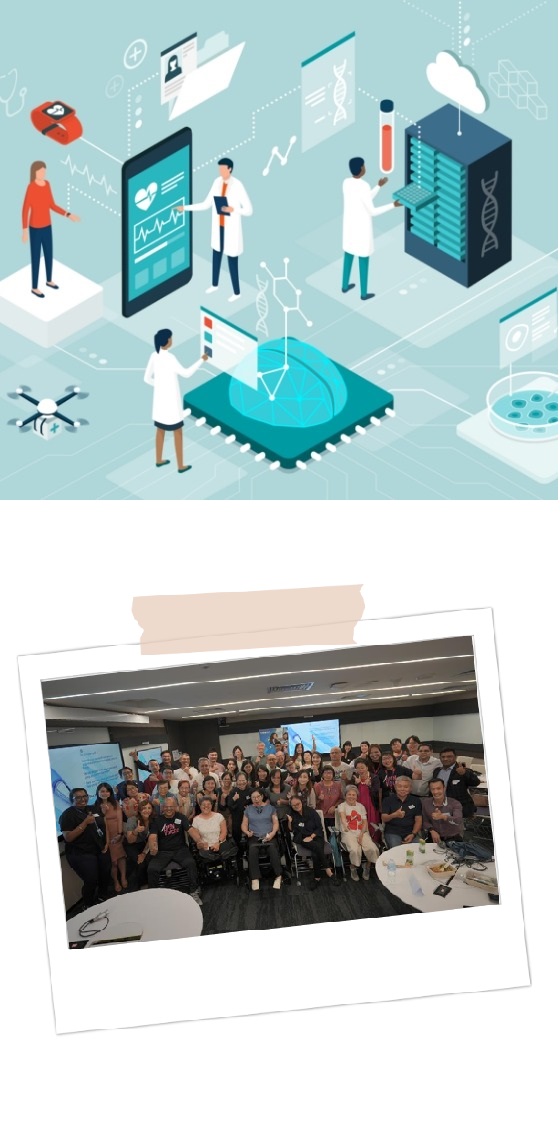
The OPEN Voices group comprises patients, caregivers, and community members with lived experience, offering valuable insights into community needs. An inaugural engagement session in August 2025 brought together nearly 40 participants for a sharing about TRUST and open conversation on the concerns and expectations of data sharing for research.
The rich discussions will influence TRUST’s strategic direction and public communications approaches.
Participants revealed a strong desire for genuine partnership in providing input to research priority-setting and reviews and emphasised that patient stories and experiences are a critical aspect to demonstrating the value of such research.
Singapore’s small population creates unique challenges for rare disease research, as limited datasets increase individual identification risks. Participants acknowledged this challenge and felt it necessary to conduct collaborative research with trusted international research networks to overcome these limitations.
Participants revealed a willingness to contribute health data when there is a clear, meaningful purpose and ethical handling. At the same time different communities required varied engagement approaches. Younger audiences may respond better to social media campaigns, whilst others prefer information delivered through trusted medical professionals or patient advocacy groups.
TRUST will continue exploring collaboration opportunities with OPEN Voices, aiming to integrate patient and public involvement and engagement (PPIE) into its activities, ensuring community voices remain central to Singapore’s health data research efforts.